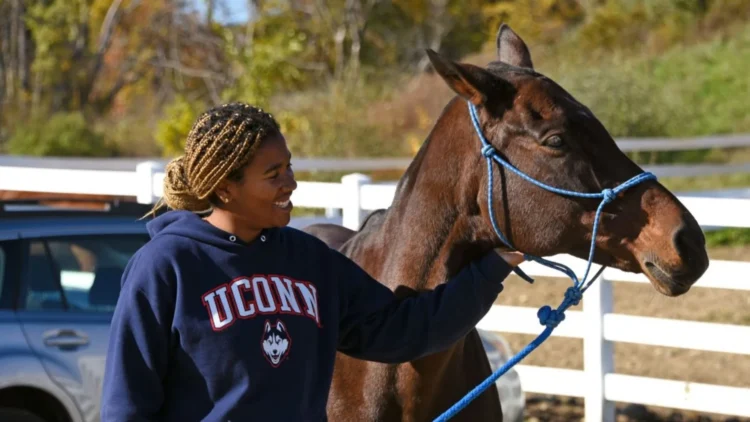
STORRS, CT — The University of Connecticut is launching a new Bachelor of Science in Equine Science and Management, aiming to position the Storrs campus as a Northeast leader in equine education.
The program, approved by the university’s Board of Trustees this month, will enroll its first students in Fall 2026.
The degree will be offered through UConn’s College of Agriculture, Health and Natural Resources (CAHNR) and is tailored to meet the rising demand within the horse industry, both in Connecticut and across the region.
tate data shows Connecticut has the largest horse population in New England and supports more than 500 horse-related businesses, generating close to $40 million in equine-related expenditures annually.
The Department of Animal Science currently operates a 70-horse herd, manages competitive riding teams, offers a public riding lesson program, and runs an active Morgan breeding program, all of which will support the new degree’s hands-on curriculum.
According to university officials, the program is expected to draw students who might otherwise leave the region to pursue similar training in states like Kentucky or Colorado.
UConn’s program will deliver a four-year education grounded in equine health, breeding, facility management, training, and business, while emphasizing communication, leadership, and entrepreneurship.
Initial enrollment is projected between 30 and 40 students, with total enrollment reaching 160 students by year four. Current student interest is already notable: 31% of UConn Animal Science majors take at least one equine-related course, and nearly 20% of students surveyed said they would have declared this major if it had been available.
University officials plan to apply for the New England Board of Higher Education’s regional tuition program, which would allow qualifying out-of-state students to attend at a reduced rate.
In the longer term, UConn also intends to introduce hybrid courses and develop an online certificate in Equine Science, broadening access to working professionals and distant learners.