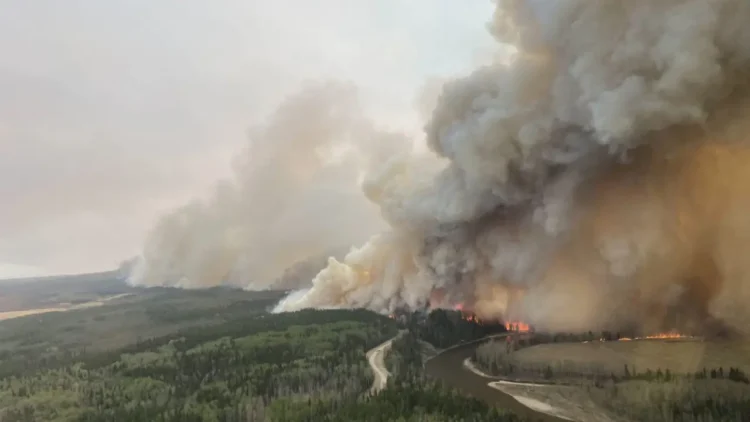
In a catastrophic turn of events, Jasper National Park in Alberta, Canada, is experiencing severe wildfires that have forced the evacuation of thousands of residents and tourists. The fires, exacerbated by a heatwave and lightning strikes, have led to unprecedented damage in the region.
On the night of July 22, 2024, an evacuation order was issued for the town of Jasper and the surrounding national park area due to multiple wildfires. Residents and tourists were instructed to evacuate west on Highway 16 towards British Columbia. The fires, which started near the town’s transfer station, quickly grew in intensity, leading to the closure of several key highways, including portions of Highway 93 along the Athabasca River.
Alberta Premier Danielle Smith reported that up to 50% of the town’s structures, including homes and businesses, might have been damaged or destroyed. Significant buildings such as the Maligne Lodge hotel were lost in the blaze.
The evacuation was described as orderly, though fraught with challenges due to the dense smoke and rapidly spreading flames. Premier Smith noted the need for improved communication protocols after a confusing emergency alert caused panic by incorrectly stating the time frame for the fire’s approach.
In response to the crisis, Canadian Prime Minister Justin Trudeau announced federal assistance, deploying Canadian Armed Forces resources and additional firefighters from countries including Australia, New Zealand, Mexico, and South Africa. This support aims to bolster local efforts to control the blazes and provide aid to evacuees.
The fires hit during the peak tourist season, complicating evacuation efforts. Mayor Richard Ireland, speaking from an evacuation center, highlighted the emotional toll on the community as residents and visitors grapple with the loss of homes and the threat to one of Canada’s iconic natural landscapes.
Approximately 7,500 people were under evacuation orders across Alberta due to wildfires, with Jasper being one of the most affected areas. The fires are part of a larger trend of increasing wildfire activity in Canada, driven by climate change. Experts note that higher temperatures and prolonged dry conditions have extended the wildfire season and increased the frequency of lightning strikes, contributing to more intense and widespread fires.
As of July 23, 2024, small amounts of rain had slightly reduced fire activity, but not enough to bring the wildfires under control. Alberta Wildfire officials cautioned that conditions could worsen as smoke clears and temperatures rise again.
Authorities continue to monitor the situation closely, with ongoing efforts to provide shelter and resources to evacuees. Reception centers have been established in locations such as Grande Prairie and Valemount to assist those displaced by the fires.
For more updates, residents and interested parties are advised to follow the Jasper National Park and Municipality of Jasper social media pages and check the Alberta Emergency Alert system.